In the AI era, the way local businesses are discovered online is changing. AI search is becoming a popular way to find local businesses, to compare services and to find agencies. AI systems can generate answers using information that is found on a business website, Google Business Profiles, directories, reviews, and more.
This is changing the focus from building citations to AI citation visibility. You don't need to submit your listing to AI citations. AI citations are not a new kind of directory where businesses or agencies can list themselves. In contrast, it's the internet resources that AI resources access or cite in their answers regarding a local business, service, or agency.
For local businesses, citation building has ceased to be merely about getting listed on sites to the greatest extent possible. The emphasis now is on ensuring that the business has an online presence that is clear, accurate, consistent, and trustworthy across the appropriate online channels, both search engines and AI systems, can use to understand the business, its services, and its location.
Local Citations vs AI Citations
Local citations are all information about a business that appears online, including the business's name, address, phone number, website, services, and category. Businesses can make, claim and update these listings on Google Business Profile, directories, websites. During the traditional search period, companies had primarily set their sights on being included in the appropriate business directories and maintaining uniformity of their NAP (Name, Address, Phone Number) throughout the internet.
That is not the case with an AI citation. A source that an AI-powered search system utilizes or references during the process of providing an answer regarding a business, service or topic that is accessible online. In the AI search era, it is essential to ensure that relevant, trusted and detailed sources of information are accessible, so that AI can be used to understand the business.
The way people search for businesses has changed from traditional search to AI-powered search. In traditional search, people often searched for a business name, service, or location, such as “digital marketing agency in Sydney” or “dentist SEO Agency in Melbourne.” Businesses focused on appearing in relevant directories, GBP, maps, and other local listings.
In the AI search era, people are asking more conversational and detailed questions, such as “Who is the best digital marketing agency near me?” or “Give me a dental SEO agency in Melbourne, Australia.” AI-powered search can use information from different online sources to understand a business and provide an answer or recommendation.
Because of this change, businesses and digital marketing agencies need to make sure their online information clearly explains what they do, where they operate, their services, experience, expertise, and other trust signals. Where relevant, businesses can also demonstrate E-E-A-T (Experience, Expertise, Authoritativeness, and Trustworthiness) through genuine case studies, qualifications, certifications, customer reviews, industry experience, and examples of their work.
The difference is that local citations are about publishing and maintaining business data online, while AI citations pertain to the sources that AI systems cite or reference when answering.
Audit Before Building AI Citations
Before creating or improving AI citations, first audit the business's existing online listings and citations. Check how the business is currently represented across GBP, Yelp, industry and local directories, review sites, social profiles, and business association websites.
Verify all information, such as business name, address, phone number, website, category, services, and hours of operation for each listing for accurate and consistent information. Check for duplicate listings, missing information, outdated information, out-of-date business addresses, incorrect phone numbers, incorrect business names, wrong website URL, and incorrect categories and services.
Once the audit is complete, fix the existing issues and identify the relevant, trusted sources where new citations or business information can be added. This helps create a more consistent and reliable online presence before focusing on AI citation visibility.
Google Business Profile is a crucial source of AI citations.
As AI-powered search becoming more popular, GBP isn’t going anywhere. It’s actually a major factor in local AI search, especially with Google AI Overviews and Google AI Mode. BrightLocal did a study in 2026 that showed 28.5% of local AI citations use GBP in Google’s AI Overviews, Google AI Mode and ChatGPT.
Firstly, make sure the business name, address, phone number, website, the opening hours and map pin are correct and complete. Choose the most pertinent categories and sub categories. Have a clear services description and services and have it understood by search engines and AI systems. Post regularly, add photos that are relevant; respond to customer reviews to remain relevant and informative.
Make sure that the information is consistent across your website, GBP and trusted directories. You need to have your GBP sync up with your other web presence, Google using data from your business sites, third-party sites and other public sites.
To ensure AI citations are seen and used, complete, accurate, specific, and consistent. Make sure your profile gives reliable information about you, where you work and what services you offer. AI search can access various sources in creating local recommendations, so a well-managed GBP can serve as a valuable source of information about your business.
Website Is an Important Source for AI Citations
Traditionally, citations relied primarily on external directories but today, with AI search, your business website is an important source for AI citations. BrightLocal found that 42% of AI citations are from a business website.
Be sure to explain your business, services, locations, target customers, year established, expertise, contact information, feedbacks, credentials when preparing your website. Maintain details regarding service and location. For instance, rather than 'We offer AISEO services', an agency might have a page to ‘AISEO/GEOSEO Services for Businesses in Sydney, Australia’ with details about their SEO services, PPC services, social media marketing or any other service.
Local businesses can also develop service pages and location pages that are dedicated to their specific location and place of business. Add valuable information, including real work examples, experience, customer information, and FAQs. Incorporate relevant schema on these pages to help search engines to understand the business, services, locations, and other important information.
The objective is not to make pages that are only for AI citations. Your site should be a place where all of this information is easily accessible and trustworthy for customers as well as AI-powered search systems.
Industry-Specific and Location based Directories Matter
Not all directories are applicable for all businesses. There are different citation sources for restaurants, lawyers, plumbers, hotels, dentists and digital marketing agencies. Instead of focusing only on general directories, businesses should look for industry-specific, hyperlocal, and niche citation sources that are relevant to their business and target customers
Industry-specific directories can help AI citations by providing more information about a business, its location, and more.
For instance, restaurants can use local food websites, Google Business Profile, Yelp, Tripadvisor, and TrueLocal. Home service businesses can use Google Business Profile, Oneflare, hipages, TrueLocal, and local trade directories.
Digital marketing agencies can use Google Business Profile, Clutch, TrueLocal, Yellow Pages Australia, and other relevant Australian business directories. They can also look for marketing and SEO-specific directories, local business associations, agency directories, and niche websites related to digital marketing
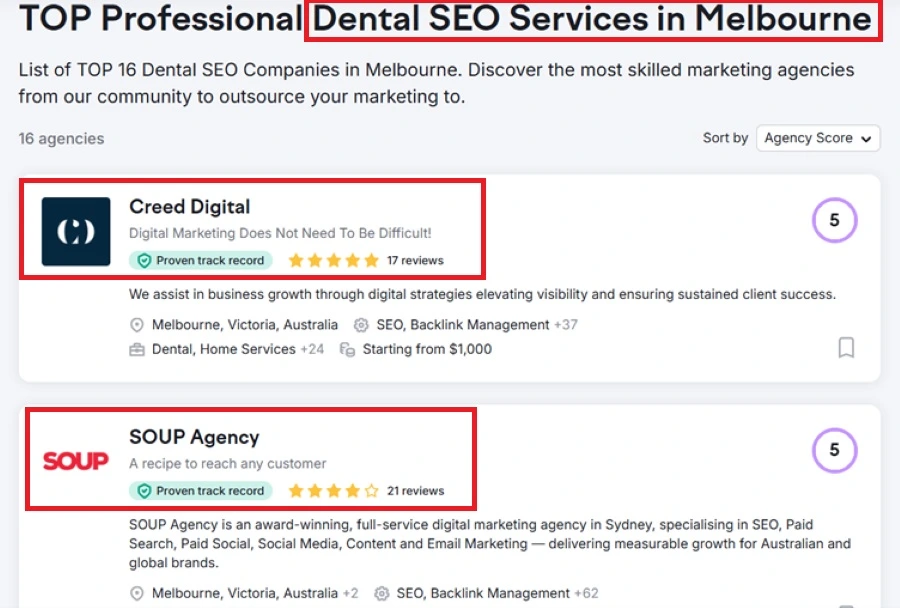 Hyperlocal sources can be especially useful when a business serves a specific city, suburb, neighbourhood, or local area. For example, a Melbourne-based business can look for Melbourne business directories, local community websites, local business associations, and area-specific websites where appropriate.
Niche sources are websites or directories focused on a particular industry, service, audience, or topic. For example, a dental practice can look for dental or healthcare directories, while an SEO agency can look for marketing, advertising, SEO, or technology-focused directories
For AI citations, focus on directories and websites that are relevant to your industry, location, niche, and target audience. Check the site's relevance, trust, quality, and overall reputation before adding your business. Check the site's domain authority, relevance, trust, quality, traffic, and overall reputation before adding your business. Prioritize directories that are relevant and well-established rather than submitting your business to a large number of low-quality websites.
NAP Consistency Still Has a Place
Despite the advent of technology, the importance of NAP consistency has remained unchanged. GBP, website, directories, review platforms, and social profiles make sure their businesses name, address, phone number, business category, services, and opening hours have been properly represented.
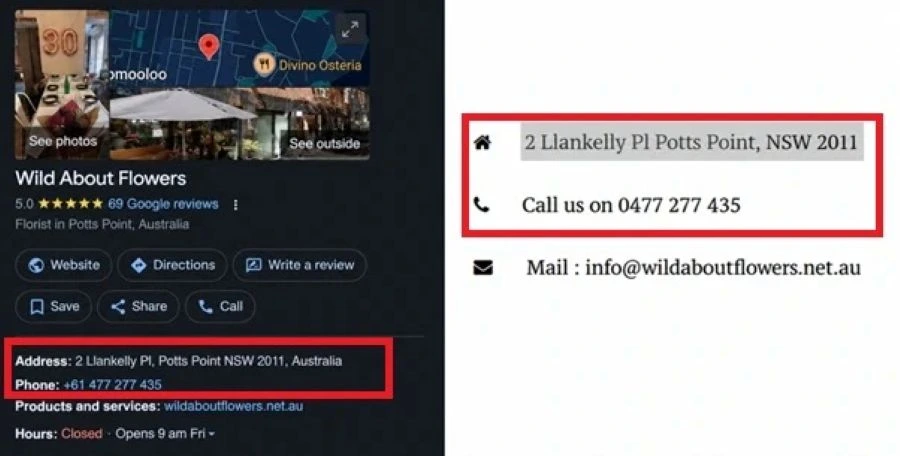
It's also crucial for AI citations since AI search systems can obtain details from different sources about a business. If these business details are the same, then it is easier to link up these mentions with the business.
But citation management in 2026 needs to be more than NAP. The wider online presence a business has should also be consistent, such as the services on offer, locations, business description, categories, areas served and other key business details. Having consistency in these areas across your website, Google Business Profile, directories and industry platforms can help you build a more definitive and accurate digital presence for your business in local and AI-based search.
Reviews Are Part of the Local Business Information Ecosystem
Another significant source of information for a business is reviews, which can play a role in the way a local business is represented in the AI-powered search. According to Google, it leverages AI to summarize reviews and extract key points from the feedback of customers.
Star ratings are not all there is in a review. They can share details on a company's services, customer experience, employees, the quality of products, location, and areas of expertise. For instance, if a customer keeps coming back to talk of a particular service, you can get some clues on the service the business offers.
It's important for businesses to foster genuine and meaningful customer feedback and follow up on it with a response to ensure that their content is visible for AI citations.
Do not make up reviews or request customers to say certain things when they are leaving a review to push these up in search results. Genuine reviews give more helpful insights into the actual customer experience.
The challenge is to establish a genuine reputation rather than to create fake review content. Having a comprehensive review profile and the correct information on the business site, Google Business Profile and other reputable sites can make for useful data that can help AI systems understand and represent the business.
Social Profiles Can Support AI Citations
Social media pages can also offer details about a local company. Business profiles on sites like Facebook, Instagram, LinkedIn, X and YouTube can serve to illustrate the services provided, the company's activity and area of expertise, and the locations where the company operates.
Keep the same business name, website, services, location, and contact details across your social profiles, website, and Google Business Profile. Link your social profiles to your website and GBP where possible.
Keep these profiles updated with useful business information. They can provide additional information for search and AI systems to understand your business. However, there is no guarantee that AI systems will use or quote your social profiles in their answers.
Final Thoughts
Just because local citations are giving way to AI citations does not mean local SEO is gone. Instead, the way businesses manage their online information is changing.
The focus should be on accurate, consistent, relevant and trusted information rather than creating hundreds of citations, especially for local businesses. After making updates, give search engines time to discover and process the changes. This can take anywhere from a few days to several weeks.
Being on the list in 2026 is not enough. Ensure your business details are visible, accurate and consistent across the internet so that users can understand your business and AI search engines can too.