U.S. federal judge has ordered Google to change parts of its online advertising technology business following a long-running antitrust case.
The ruling, unsealed on Sept. 16, 2026, comes after a previous finding by Judge Leonie Brinkema that Google had been illegally monopolizing certain portions of a segment of the online advertising technology marketplace.
But the judge did not call for the dismantling of Google's advertising technology business or its sale of its advertising exchange, AdX. Instead, Google will have to make changes to how some of its advertising systems work with publishers and competing ad-tech platforms.
Google has said it disagrees with the liability ruling concerning its Google Ad Manager publishing tool and plans to appeal.
What Happened in the Google Ad Tech Case?
The case is based on the theme of the impact of Google on technology in the buying and selling of advertising on web pages.
There are a number of technologies that can be used together when a visitor visits a Web site to determine which ad to serve and what to charge an advertiser for serving it. This is done very rapidly, usually via auctions – automated auctions.
Google is a key player in this advertising technology ecosystem, with technology for publishers to manage their ad space and an exchange that pushes ad demand into publisher inventory.
The case explores the interactions between these technologies, and Google's role in various stages of the advertising process and how this impacts competition among ad-tech companies.
The newest court ruling deals with what changes Google must make to its advertising technology and business practices after the court's previous findings. These changes include requirements around how Google's systems work with publishers, competing ad servers and other advertising technologies.
What Advertising Technology Is Changing?
The ruling affects several connected parts of Google's advertising technology ecosystem.
Google AdX
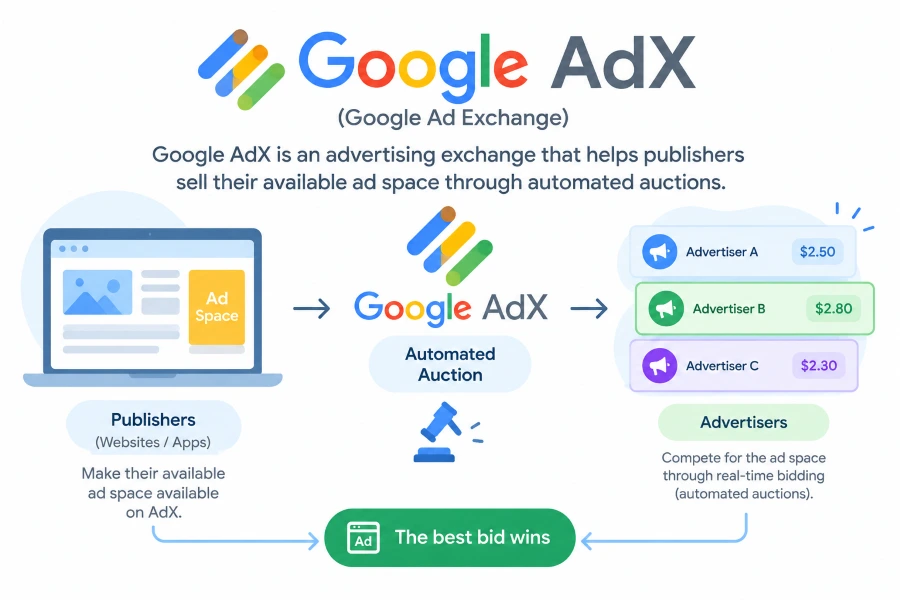 Google AdX, (Google Ad Exchange) is an advertising exchange that helps publishers sell their available ad space through automated auctions. For example, when a news website has an empty advertising space, AdX can connect that space with advertisers competing to show their ads. The process happens automatically and very quickly.
AdX is one of the most important parts of this case. The U.S. Department of Justice had requested that Google sell AdX, but the judge rejected that request. Instead, Google will have to make AdX provide real-time bids to competing publisher ad servers. This could give publishers using other ad servers more opportunity to receive and evaluate Google's advertising demand alongside other sources.
Google Ad Manager / DFP
Another important technology in the case is Google's publisher ad server, known historically as DoubleClick for Publishers (DFP) and now part of Google Ad Manager.
A publisher ad server helps a website manage and sell its available advertising space. The technology itself is not being shut down or replaced. Instead, the court's requirements change how Google can use it with AdX.
Under the ruling, Google cannot require publishers that use its ad server to also use AdX. This affords publishers greater flexibility in how they sell their ad space with other advertising exchanges and technologies.
Prebid
The ruling also involves Prebid, an open-source technology that allows publishers to receive bids from multiple advertising platforms at the same time. For example, instead of relying on only one advertising source, a publisher can use Prebid to bring bids from different platforms together and compare them for available ad space.
Under the ruling, Google must create and support integrations between AdX, Google’s publisher ad server, and Prebid. The goal is to make it easier for publishers to connect Google's advertising systems with other demand sources and have more options when selling their advertising space.
Competing Publisher Ad Servers
The decision also impacts other publishers' ad servers that compete with Google Ad Manager. These are all technologies that publishers can use to control and sell their website advertising.
The new mandates require AdX to offer real-time bids to other publisher ad servers bidding. If that's the case, then publishers who use other ad servers may have the opportunity to accept Google's ad demand along with some of other platforms, which might provide them with more choices in deciding the usage of his/her available ad space.
Google's Advertiser-Side Technology
The order also makes applicable guidelines to Google's advertiser-side advertising technology. These are essentially the tools that are available to assist advertisers in the purchase of digital advertising.
The court requires Google not to give its own ad-tech products an unfair advantage simply because they are owned by Google. The ruling also places restrictions on how Google's advertiser-side technology can interact with Google's publisher ad server.
Another reason it’s important to know that Google Ads and Google AdX and Google Ad Manager are all different pieces of the advertising ecosystem. The changes in this case mainly concern how these technologies interact with each other and with competing platforms.
How Does the New System Differ?
Before the new requirements, Google had several important technologies involved in the process of selling digital advertising space. For example, publishers could use Google Ad Manager (DFP) to manage their ad space, while AdX was used to connect that inventory with advertising demand.
Under the new requirements, Google must make these systems work more openly with competing ad-tech platforms, including Prebid and other publisher ad servers. AdX must provide real-time bids to competing publisher ad servers, and Google must also allow publishers to access and export certain data from its ad-tech systems. This gives publishers more options instead of requiring them to rely only on Google's own technologies.
Who will be impacted?
Publishers
Publishers are one of the groups that are most impacted by the ruling. This includes news websites, blogs, online magazines, sports websites and other websites that sell advertising space. The changes primarily relate to how Google Ad Manager, AdX, Prebid and other ad servers interact.
New rules will mean that publishers not under contract with Google Ad Manager will not be required to use AdX. AdX also needs to have real-time bid support for other ad servers out there, and Google needs support for Prebid connections. This provides publishers with more flexibility in choosing advertising partners.
Google should also give publishers access to and the ability to export some of its data from Google Ad Manager and AdX. It may make it simpler for publishers to employ other ad-tech companies if they opt to.
Ad-Tech Companies
The new rules could also impact companies that are in competition with Google's advertising technology. AdX has to make real-time bids to the other competing publisher ad servers, and that could make it easier for other ad-tech platforms to work with Google's advertising demand. Google should also enable the integration of Prebid, Google Ad Manager and AdX. That could lead to more chances for other ad-tech companies to operate in the digital advertising landscape.
Advertisers and Digital Marketing Agencies
Most advertisers and digital marketing agencies will experience an indirect effect. If you have a frequent Google Ads campaign, then there's no need to change your account right now due to this ruling. The biggest shifts are occurring within the ad-tech platforms that are being used to trade digital advertising.
Businesses that are involved in programmatic advertising, display advertising, publisher monetization, and/or large-scale media buying should be aware of these changes. As Google and other ad-tech firms adapt to this, the future of how the various advertising technologies work together – and how they play off one another in an advertising auction – may change. The impact in the real world will depend on how the new requirements are implemented and market reaction.
The Bigger Picture
The digital advertising industry is already being revolutionized by AI, automation and new platforms, all of which are affecting business's interactions with customers.
At the same time, regulators are paying closer attention to how large technology companies operate the systems connecting advertisers and publishers.
The Google ad-tech ruling adds another major development to this changing landscape.
The key point is not that Google Ads is disappearing. Instead, the ruling is focused on how Google's underlying ad-tech systems interact with publishers, advertisers and competing advertising technologies.
As Google begins implementing the new requirements, the next important question will be how these changes affect the real-world buying and selling of digital advertising.