If you are a PPC agency already managing paid ads, you are probably already familiar with ChatGPT Ads and know that advertising in AI platforms is becoming part of the market. So, the latest announcement from OpenAI caught my attention.
Now, OpenAI is introducing something new: a visual ad format for ChatGPT Ads. OpenAI announced the new format on October 5, 2026, giving advertisers another way to showcase their products and services visually inside ChatGPT. I think this is an interesting update for PPC agencies to watch.
For me, the visual part is what immediately stands out because it changes how a brand can present itself inside an AI experience.
OpenAI says the new visual ad format is designed to help people explore products and services visually. Instead of relying only on ad copy, advertisers can use images to show product inspiration, how a product is used, or the experience it can provide.
I see this as an evolution for advertising in a world where people are already turning to ChatGPT for ideas, recommendations and help making decisions.
For example, imagine someone using me to generate ideas for decorating a living room. A furniture brand could potentially use a visual ad to show how its products could fit into that kind of space. The idea is not simply to tell the person about the product, but to help them see the possibility.
OpenAI says the initial test will happen during image generation in ChatGPT. The ads will be clearly labeled and kept separate from the image being generated. OpenAI also says advertising does not influence the answers ChatGPT provides. Testing is planned to begin later in October in the U.S. with an initial group of advertisers.
This Is More Than Just Adding an Image to an Ad
When I first think about a visual ad, it is easy to imagine it as simply a normal text ad with a picture added. But I think the idea is slightly different.
Traditional advertising often tells people what a product or service does. Visual advertising can show people what that product or service could look like in their own situation.
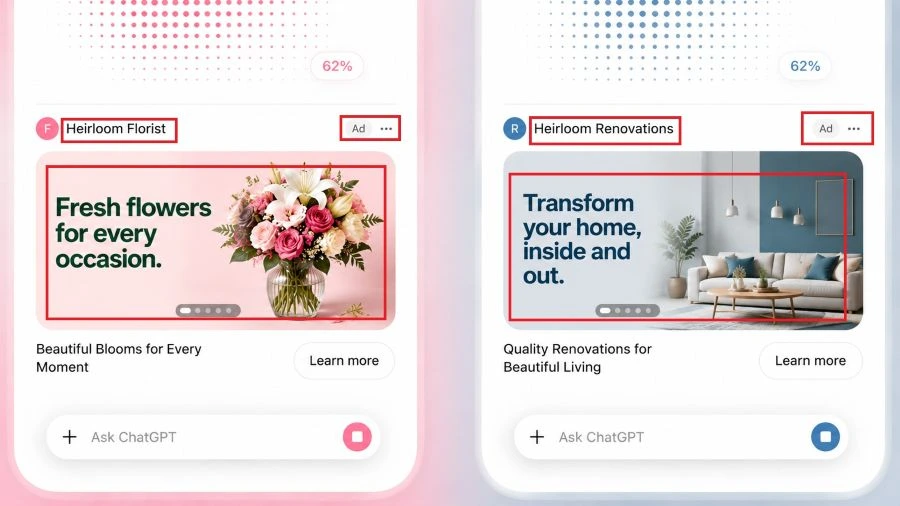
That difference can be important. If someone is looking for a sofa, for example, they may not just want to read about its size and material. They may want to imagine how it would look in their living room. If someone is considering a kitchen renovation, they may want to see design ideas before contacting a company. That gives advertisers another way to communicate their value.
Brand Safety Is Becoming Part of the Conversation
OpenAI is also working with DoubleVerify and Integral Ad Science (IAS) to evaluate brand suitability. In simple terms, these companies help advertisers understand whether their ads are appearing in appropriate environments and reaching the right audience.
According to OpenAI, its placement guardrails are designed to keep ads away from emotionally vulnerable, sensitive or otherwise unsuitable contexts. This gives advertisers more confidence that their ads are being shown to relevant audiences while also protecting the brand from unsuitable placements.
What Does This Mean for PPC Agencies?
For digital marketing agencies, I think this creates a new opportunity beyond simply adding “ChatGPT Ads management services” to a service list.
Looking to offer ChatGPT Ads services to your clients?
Chat on WhatsApp +91 94423 64284
Google Ads and Meta Ads are already familiar channels for most digital marketing agencies. ChatGPT Ads gives agencies another environment where customers can discover businesses while they are asking questions, exploring options and deciding what they need.
Agencies offering ChatGPT Ads services can help client to decide which products or services are suitable for visual advertising, develop the right creative assets, write the ad messaging, set up tracking and monitor campaign performance. This makes the agency's role much broader than simply creating and managing an ad.
I also think agencies can compare ChatGPT Ads performance with the client's existing Google Ads, Meta Ads and other paid campaigns. Agencies can look at clicks, conversions, cost and overall campaign performance to see how ChatGPT Ads fits within the client’s wider paid marketing strategy.
This shift could also create services around AI advertising strategy, visual creative, campaign management, conversion tracking, reporting and optimization. Agencies that start learning the platform can build practical experience. They can understand which approaches work for industries and customer journeys.
For me, the biggest opportunity is that agencies don't have to treat ChatGPT Ads as a completely separate service. They can add it to the paid advertising strategy they already provide and help clients understand how to advertise where customers are increasingly asking questions and making decisions.
Creative Strategy Will Need to Change
I also think advertisers will need to rethink their creative assets. With traditional search advertising, agencies spend a lot of time working on headlines, descriptions, keywords, landing pages and ad extensions. Visual advertising adds another layer to that process because the creative needs to communicate the product or service quickly through images.
For an ecommerce brand, this could mean showing the product in use rather than simply describing its features. For a travel company the creative could show the destination or the experience customers can expect. For a home renovation company, it could show a finished project or a before-and-after transformation. Agencies may also need to consider lifestyle visuals, demonstrations, use cases and other creative formats that help customers understand the value of an offer.
For me, the important point is that the creative should not just look attractive. It needs to make sense visually and communicate the right message quickly, because people may be discovering the brand while they are already exploring a specific need or idea in ChatGPT.
Key Areas to Prepare Before Launching Visual Ads
If I was preparing a client for the new visual ad format from ChatGPT Ads service, I would not begin by building the ad and putting budget behind it. First, I’d make sure the business had the right foundation in place.
First, I would check the website and landing pages. The website needs to show what the business provides who it helps and why its products or services are helpful. Key details like prices, features, advantages how people use them customer feedback and ways to get in touch should be simple to locate.
I would also make sure the business details and online presence are correct. The business name, services, contact information and other important data should be right. The same, on the website Google Business Profile and other business directories. Consistency builds trust. When someone discovers the business through ChatGPT ad and then researches it, the information should be consistent.
Next, I would examine the visual assets. The client should have high-quality product images, service visuals, customer examples, case studies, demonstrations or before-and-after images where relevant. These assets can give the agency more options when creating visual advertising.
The customer intent and advertising message also need to be clear. The visual should be relevant to what the customer needs and help them understand the product, service and experience fast. A good visual is not just attractive, it should also convey the value of the offer.
Finally, I'd make sure tracking is all set before the campaign goes live. Conversion tracking and UTM parameters need to be set up correctly so that the agency can track clicks, site activity, leads, purchases and other important actions.
For me, these steps should come before putting the ad budget behind a visual ads campaign. A strong foundation makes it easier for an agency to create the right creative, measure performance and optimize the campaign based on actual results.