You've created a Google business profile but they still aren't ranking well on local search? Well, you might be thinking to yourself: “My profile is already created and verified, why am I not seeing better visibility on Google Map Search, Voice Search and AI Search?”
This is where GBP Optimization comes in.
Once a GBP audit has been done, the next step is to optimize the sections that could be impacting the profile's visibility locally. The aim is not to change randomly or put keywords in all the wrong places. It's about creating the profile accurate, relevant, useful and following the Google guidelines.
How Local Ranking Works
Getting to the optimized Google Business Profile requires knowing what can impact its local presence.
The three biggest factors used to determine local search results are relevance, distance and prominence.
Relevance – how well the business fits the customer's search. This is why I like to look at what it has to offer in the business category, services, description, and other pertinent details in the profile.
Distance – The proximity (or distance) between the business and the individual searching for the business or the location searched. This is the reason that the same business can be found in various spots on different search sites.
Prominence – How local the business is. This can help make the business more noticeable with information about the business, including reviews and links.
These 3 are major reasons why merely adding keywords to a GBP does not ensure better rankings.
Below, I detail how I optimize the various components of the Google Business Profile (GBP) with these points in mind, and how each of these optimizations can help with visibility in Google Search, Google Maps, Voice Search and AI Search.
1. Optimize Basic Business Information
Once I've completed the audit, I tidy up the information in the business profile according to Google's standards.
These pieces of information are used to Google become familiar with the business, while also assisting customers discover the right information on Google Search, maps, Voice Search and AI-driven search results.
I can guarantee you that the business name is the real business name and NOT a keyword or a business advert. I also update the address, phone number, website, hours, category and service area to alter information. And stick to the information throughout the site and in the appropriate business listings.
For instance, instead of adding “Best Florist & Flower Delivery” to the real business name “Sydney Flower Studio” to boost rankings, I leave it as is.
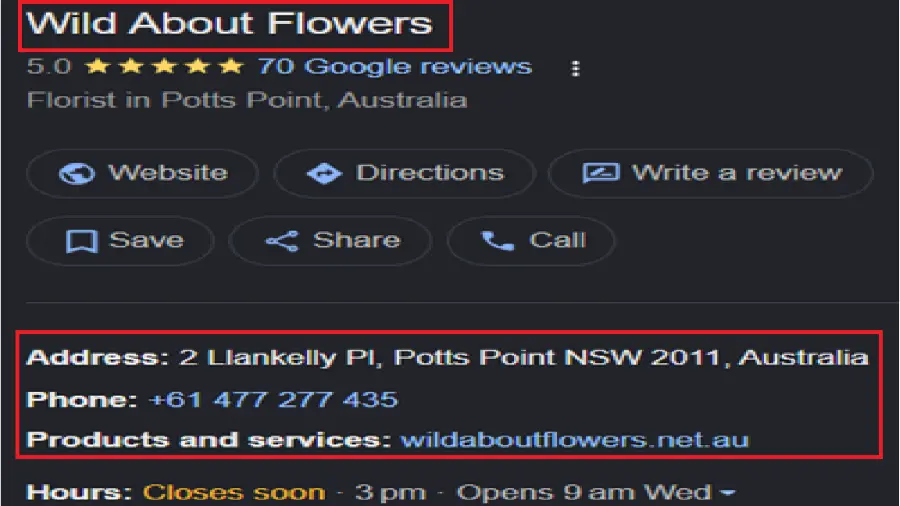
I ensure that the address and location information are correct, so that customers can reach the correct location, using Google Maps.
Voice Search, business information is helpful when people ask questions like “What time does this florist open?” or “What is the phone number of Sydney Flower Studio?”
AI Search, with consistent business details, it becomes much easier for AI systems to comprehend what the business is about, its location, what it provides and how customers can reach it.
I also upload profile and profile cover photo, clear and good quality photos which actually represent the business. These visual elements will help increase the confidence customers have when they view a business in Search or Maps and offer context about a business.
2. Choose the Right Business Categories
Once an audit is done, I fine-tune the main categories and sub-categories according to the actual service provided by the business.
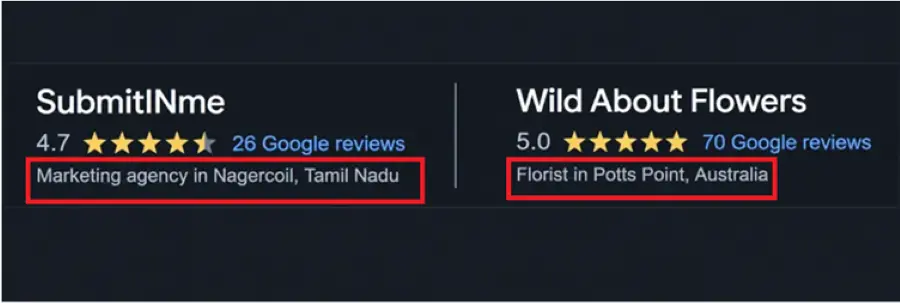
I would select the most specific primary business that best represents the main business and NOT just pick one of the categories because it has a target keyword. Google also suggests using a category that identifies the business, rather than what it sells or provides.
Google categorizing correctly enables Google Search and Google Maps to find the right search matches. It can also assist in Voice Search, allowing customers to ask questions like “Find a florist near me,” and AI Search, where systems can deduce the type of business for a particular query.
For sub categories, I only add those that are genuinely a description of business, or a significant service of the business. I don't have a category for every service or product.
By maintaining clear sub categories, Google and AI systems understand the business better; otherwise, it will send mixed signals.
I also check back in on the categories as necessary as Google changes categories over time. However, in the context of an audit PlePer's categories database might be useful to view newer or changed categories.
3. Maintain an accurate list of Opening Hours – including Special Hours
One of the fields is hours which is a basic GBP field but I consider it as a customer experience field.
I update:
- regular opening hours
- holiday hours
- special hours
- service-specific hours where applicable
- whether the hours match the business website and other important listings
If the hours do not correspond with the website and other public details of the business, check to see if they are correct.
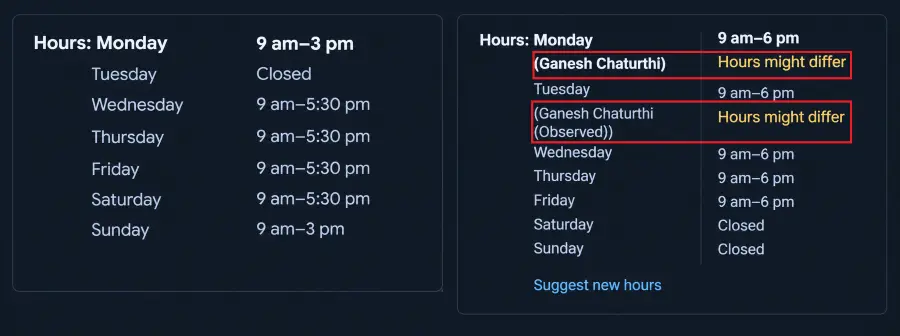
Google Search and Maps: Accurate hours help Google show the business correctly
Voice Search: particularly for searches such as “open now” or “florists open near me.”
AI Search: where customers ask, “Is this business open today?”
When it comes to answering questions about the availability of a business at a specific time, consistent hours provide AI systems with clear information to respond to these questions.
Google's Special hours are used instead of changing regular hours unnecessarily when there are holidays, events, or temporary changes. Google offers an alternative hour’s entry to allow for special hours to not be over-written by the regular hours.
I also check the hours at the GBP, website and any critical business listings to ensure that no conflicting information is being delivered to customers and search systems.
When I update, I always check the live listing as well, as it's not just about saving the setting, it's about displaying the correct information.
4. Make the Business Easy to Find on the Map
After an audit, I also fix the actual map location, not just the written address.
I enter the full address, building or unit information as required and place the map pin in the correct building or property. I also ensure that the location details are in line with what is happening in the real world.
Google says it's best if you include a full and precise address, including the building, suite, floor or unit number if applicable. Google also enables businesses to edit the map pin if the business is not in the correct position on the map.
If they are located within a shopping centre, office block or another larger building, I explain where they are as clearly as I can to ease customers' navigation to the correct location.
Location Accuracy: Latitude and longitude also may help identify the exact location of a map-pin issue if it requires further investigation. I'm using them as a location check, not as an optimization that I want to use as its own GBP field.
I use local features that assist customers to know where the business is located but do not include promotional place terms in the official address.
Google Maps and local Google Search rely on accurate location information more than ever.
Where customers can look for a business in their region and “near me”. It also assists Voice Search in providing location-specific answers to queries correctly, like “Where is the nearest florist?
AI Search: A location that is clearly and consistently defined will enable AI systems to understand the location and what it means for a location-specific request.
5. Write a Useful Business Description
Then I refine the business description to fit Google's Guidelines.
I’m using the description to explain the following:
- what business does
- its main products/services
- the regions it covers
- how long it has been in operation, when this is useful
- relevant business history or background
- what sets the business different
- details that help customers understand the business
.webp "Business description in Google Business Profile")
When the description is clear, Google Search and Google Maps can respond to these questions. It can also be used for Voice Search so customers can ask natural questions like ‘Which florist delivers flowers in Sydney?
For AI Search, I am giving information in clear and specific terms to help artificial intelligence systems better understand the business, services, location, experience and key differences to answer relevant question.
For example, if the company has a long history of operation or a good local history, for instance 20 years. I ensure that the description makes sense to the reader by describing what the business does, its primary services, the geography it operates are, and how it is useful to the reader. I use real business information, and do not present misleading information, promotional material or repetition of key words.
I also adhere to Google’s content guidelines. No fake claims, misleading information, too much promotional language, special offers, links and key word stuffing.
For example, instead of saying:
"Best Sydney Florist | Cheapest Flowers | #1 Flower Delivery | 50% OFF | Call Now!"
will write natural language description of business, their experience, services, location and what to expect. The description should be able to tell Google and customers about the business, rather than be a sales pitch.
6. Add and Organize Relevant Services
Talking about the company, its main services, where it's located and why customers will love it is not a secret. I use the factual information of the business and not misleading information, promotional or over used words.
Google suggests you list accurate and relevant services; hence I try to avoid repeating keywords and/or adding services that have no relevance.
For example, a “florist may offer”, “sunday flower delivery”, “sympathy flowers delivery”, “fresh flowers delivery”, “birthday flowers delivery” and “valentine roses delivery”
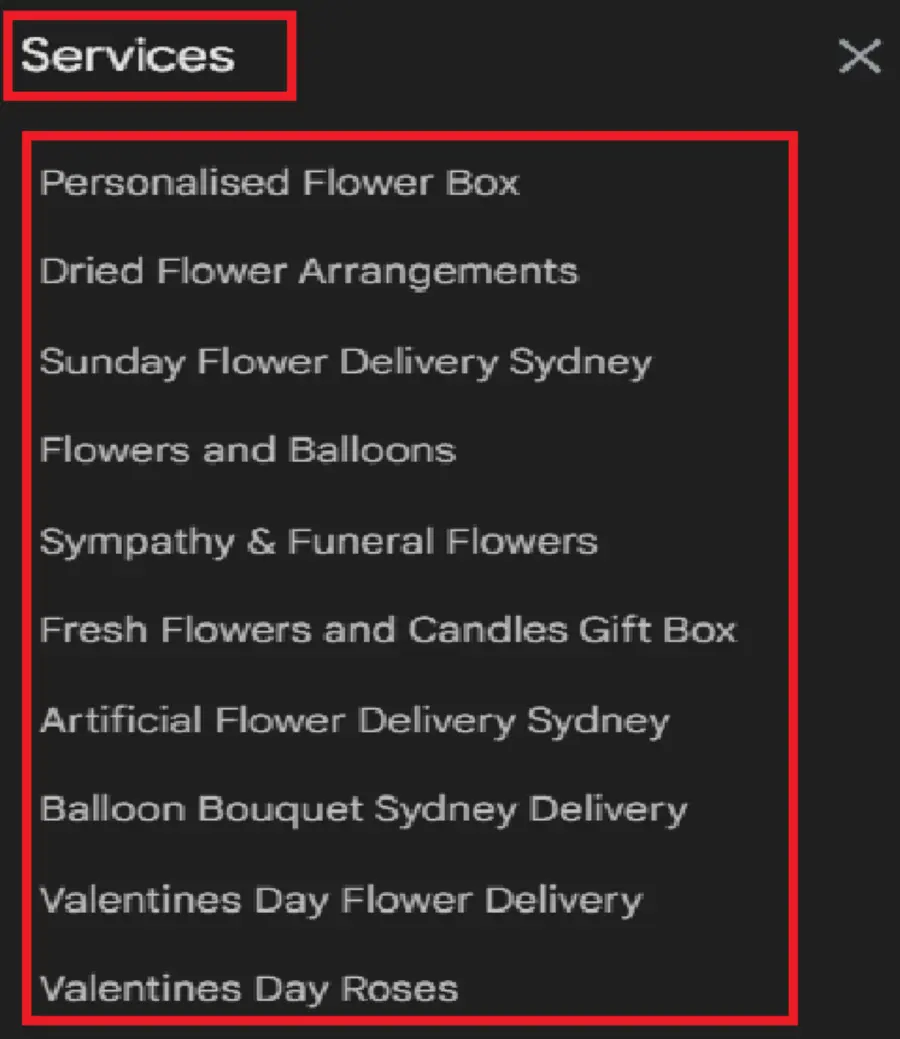
The information being provided will be used to match the profile with relevant searches on Google Search and Maps. It can also be used for Voice Search, where customers can pose questions like “Who provides bathroom renovations near me?”
For AI search, the detailed and accurate service information enables AI systems to comprehend the nature of the business and determine if it matches a customer's inquiry.
I also ensure all services listed in the GBP match with the website and other important business listings. This makes the customer and search systems more aware of what business has to offer.
I also check and optimize the Google booking or appointment link if the business has bookings or appointments. Making sure it is connected to a proper booking/profile and that it works correctly, allowing customers to book a service or consultation from the profile.
For example, a florist which offers wedding consultations can have a booking link for the clients so that it is easier for them to book consultations.
7. Add Useful Photos and Regular Posts
Optimize photos and GBP posts with helpful, authentic and relevant information.
Photos: I post clear, visually representative photos of actual business, products, services, team, location or finished work. If appropriate, I may also include in the image metadata images that are properly geotagged with the relevant information regarding the location of the business. Do not use blurry or low-quality, heavily edited, misleading, or irrelevant images
For Example,
A builder: Projects completed, various stages of construction, materials used, completed rooms, and the team working on the project.
Florist: shop, flower arrangements, wedding bouquets, preparation for delivery, team and work.
Videos: I do not upload too large or long videos; I abide by the Google technical requirements. Google presently supports a maximum of 30 seconds of video, 75 MB and a minimum resolution of 720p.
Posts: post as often as there is something useful to share, but no more than 1-2 per week; not overstuff the post with keywords and stick to Google's policies.
Good examples include:
· a new service or product
· a completed project
· a seasonal update
· an upcoming event
· holiday information
· a genuine offer with clear terms
I stay away from:
"50% OFF!!! COMPLETE FREE SERVICE!!! BUY NOW!!!"
Promotional posts would not be a problem in and of itself, but if you are promoting too much, it can appear as though the profile is just an advertisement. I also steer clear of false promises and promises that would be out of the company's means.
There is a maximum of 1,500 characters that can be used in a GBP post description.
The information can be displayed on Google Search and Google Maps, and provide more relevant content to Google's Voice Search and AI Search to better understand the business.
Keep text in your document free of superfluous links.
When customers have to go to a page, I much prefer to use the appropriate call to action rather than stuff the post text with a long URL.
8. Build Trust Through Reviews and Responses
Google won't permit fake reviews, incentivized or paid reviews, or rating manipulation. I only ask the True customers to share their experience.
Therefore, I provided the best optimization of the review section by emphasizing the use of authentic customer reviews and the regular response. I also professionally and personally reply to positive and negative reviews. If it is a negative review, I respond politely and if applicable, provide a means to sort things out behind the scenes.
Honest reviews will give valuable insight to the services that the company offers, the experience that their customers have, and the advantages that you will get from the company. This information might help to better understand the business on Google Search and Maps, and help give more context to Voice Search and AI-powered search results.
When I encounter spam, fake or policy violations I can flag it as spam for Google to review and possibly remove. I don't suggest attempting to delete a true negative review just because you do not like it.
9. Use Profile Strength as a Completion Check
I also see the Google's Profile Strength indicator after I've made all the main changes. It can assist in filling in missing data and motivate businesses to include sections like business information, descriptions, hours, photos, videos and posts.
.webp "Google Business Profile showing profile strength")
This does not automatically imply that a profile with a higher completion percentage will attain higher rankings than its competitors. I use it as a completion check and then go back to the real business information, search visibility, customer experience and customer performance data.
By filling in the necessary details, Google and users will have a better understanding of the business on Google Search, Maps, Voice Search and AI-powered search
10. Use Relevant Keywords Naturally
After I've optimized the main profile information, categories and services, I'll use appropriate local keywords in the main profile, in a natural manner.
First, I use Google Keyword Planner to find out the search queries that I need to look at and I then go and check the search volume of the area that I'm targeting. This enables me to grasp what people are searching for in that area actually is.
I also search these in Google and view the business profile for these searches. If the query is listed for this profile, I include the query as a keyword in the profile as appropriate. Then I add them in wherever they can fit in the description of the business, services, posts etc. in the profile.
If you're a Sydney florist, for instance, then your key words can be “flower delivery Sydney”, “online flower delivery Sydney”, “wedding flowers Sydney or florist Sydney”.
It could be easier for Google Search and Maps to understand the business with the natural and relevant keywords. It can also improve the Voice Search and AI-powered search system's understanding of the business and what type of queries are relevant to the business.
Never add the keywords to the business name unless they are in the actual business name, I avoid keyword stuffing.
11. Keep Local Citations Accurate and Consistent
Ensuring that the business's name, address, phone number and website (as well as essential details) are accurate and consistent across the local citations.
Correct inaccuracies, correct old addresses or phone numbers, correct duplicate information on profiles and add missing information to profiles as needed.
Australian florists could be listed in directories such as "Yellow Pages Australia", "True Local", "Hot frog Australia", "Start Local", "Yelp Australia" or other local and/or industry specific directories applicable. It's not all the directories, but only ones that match my interests and are reputable. Also don't run duplicate or misleading listings.
Google and customers get a better image of the business with information consistency in important directories It can improve local visibility in Google Search and Google Maps, and provide a unified appearance of a business which can help AI and Voice Search understand the business and its contact details and address. After optimizing it, I then track the performance of the profile & how customers are finding and interacting with the business profile.
12. Enhance and track local rankings
Once the GBP improvements have been completed, I test how effective the GBP is by looking at the local ranking data and carry out more GBP improvements.
I monitor the search queries for the services and locations such as “florist Sydney”, “flower delivery Sydney”, “wedding flowers Sydney” and “online flower delivery Sydney”, and compare to pre and post optimization results.
I also view the business's Google Search and Google Maps appearance, and do some "where am I" searches. If applicable, I also check a few of the relevant Voice Search/AI-powered search results to make sure that the business information is being captured.
I would expect to see some changes after 4-12 weeks. There could be some changes that occur sooner and competitive searches that could take longer.
Once it is still not good, I use the results to learn how to improve the quality of categories, services, business information, content, reviews and local citations. I don't focus on their results that much because they can change based on the relevance, distance, competition and website prominence.
13. Measure GBP Performance and Insights
After optimizing the profile, I view the performance of the profile and how customers are finding and using the business profile.
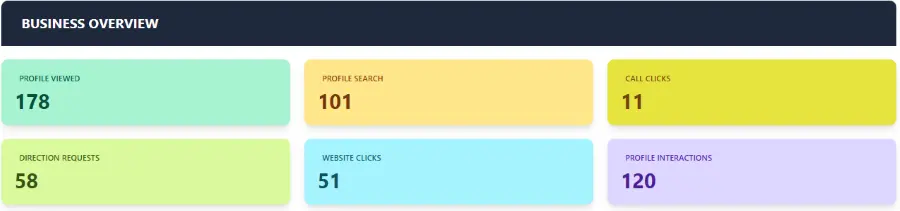
I look at:
- Searches what people searched for prior to discovering the business.
- Views – Number of people that saw the profile.
- Calls – number of people who clicked to call
- Website visit – how many people visited the website
- Direction requests – how many people asked for directions
- Messages and bookings – if applicable.
How to Check GBP Performance
To check the GBP performance directly in Google:
On Google Search page, click on Business Profile, then Performance, and then select the date range, and then apply
I compare data from different time periods to see if profile views, searches, calls, website visits and other interactions with the customer are improving since optimization.
For GBP reporting, I use H2Fi’s Google Business Profile & Reporting tool to track profile views, calls, website clicks, direction requests, search queries, and performance trends in one place
Tracking these results regularly helps me understand whether the changes made to the profile are actually improving customer engagement. Digital marketing is constantly changing, with new trends, platforms and strategies emerging all the time. Stay tuned for my upcoming updates on the latest digital marketing trends and news.